

Why We Occasionally Say Fuck
We like a well-timed F-bomb. I like them a lot, if I’m honest. Within our professional content, though, we use them sparingly and on purpose. You may have noticed. Some of you may hate us for it. We certainly hear…
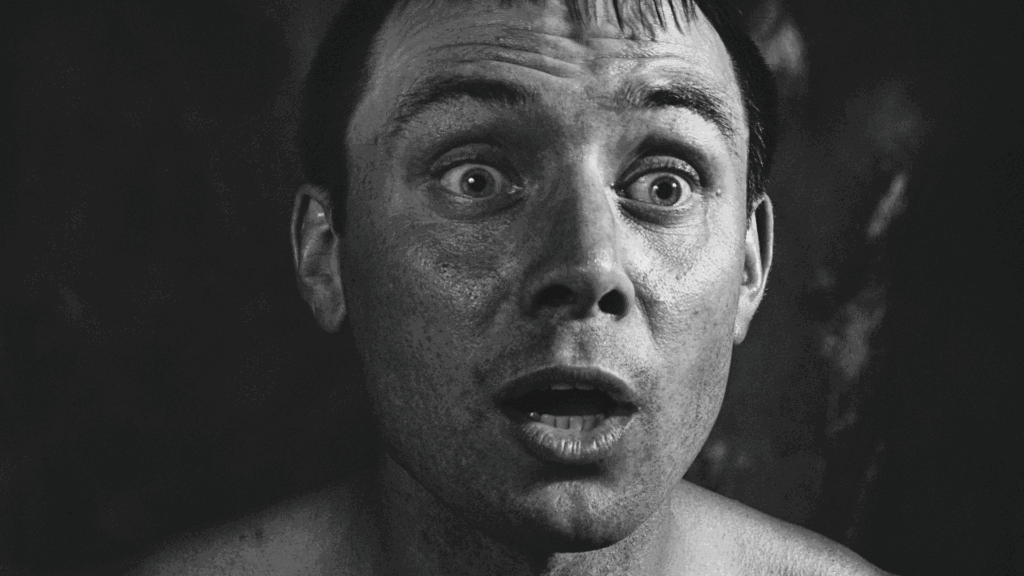
We like a well-timed F-bomb. I like them a lot, if I’m honest. Within our professional content, though, we use them sparingly and on purpose. You may have noticed. Some of you may hate us for it. We certainly hear about it. People comment. People talk. Which, frankly, is part of the point.
We don’t swear because we’re lazy, provocative, or trying to dress up as the “cool cyber company”. We swear because, when used sparingly and deliberately, it works. There is intent behind every profanity we let through.
We don't do it constantly. It's not gratuitous, or there for cheap shock value. We swear occasionally, with purpose, and with a clear understanding of what language does to attention and memory. And yes, we know it’s a little bit naughty. But that’s not a side effect. That's the whole point.
There's a strange fiction that governs our professional lives. Emails are polished to the point of emotional sterility. Slide decks are scrubbed of anything resembling how real humans talk. And LinkedIn... well, LinkedIn reads like a parallel fucking universe where we're all delighted to announce things, passionate about stakeholder alignment, and everyone thinks there's a great synergy. Nobody is irritated. Nothing goes wrong. Language just floats there, frictionless, devoid of personality, weaving its way through your grey open-plan office.
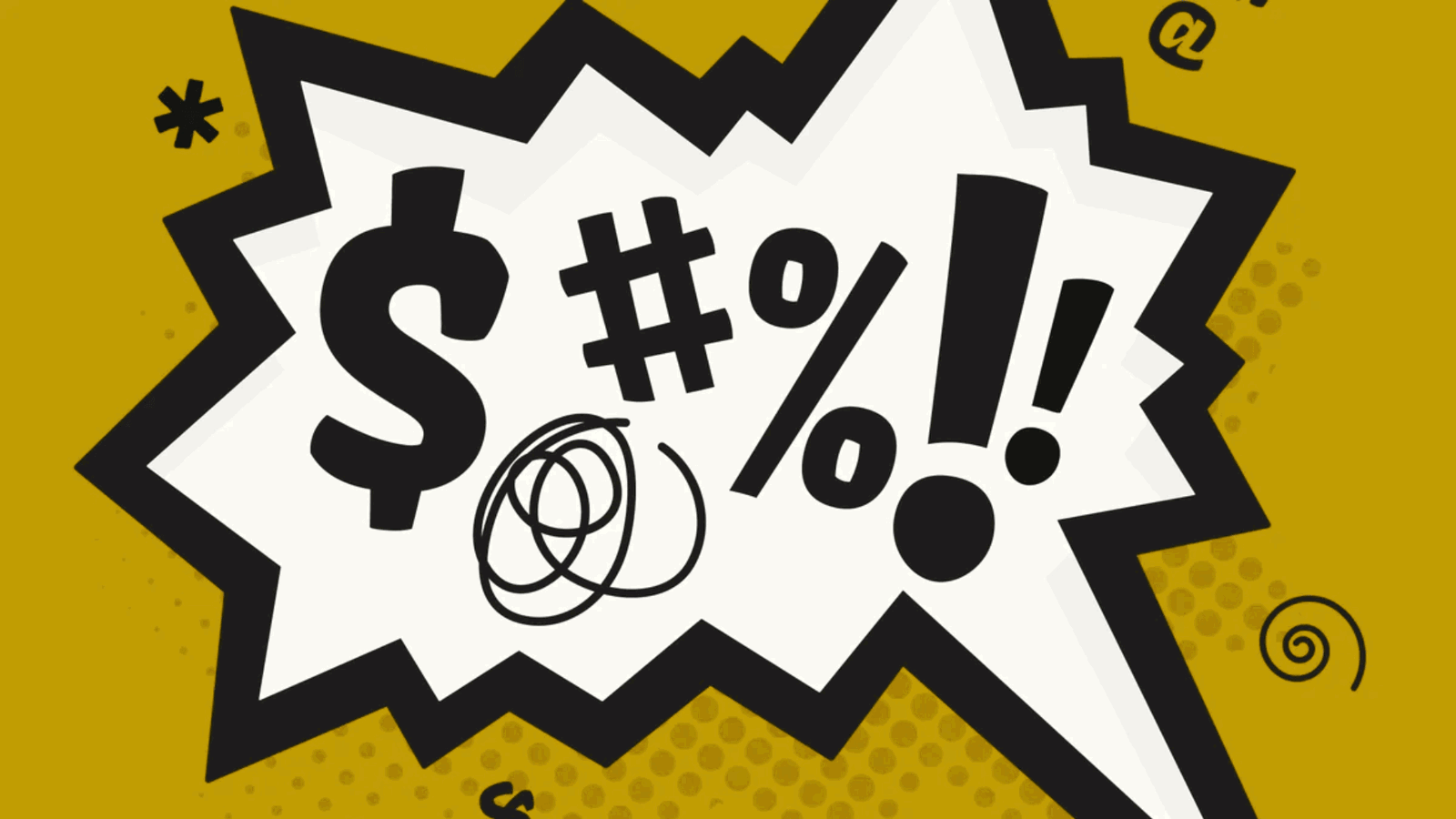
Then we finish work. We go home. We put on a Guy Ritchie film (seriously, watch The Gentlemen if you haven't already, it's FANTASTIC) and we sit enjoying the kind of language that would result in a conversation with HR and probably a written warning if we repeated it verbatim around the water cooler the next morning. We laugh when Jimmy Carr throws a c-bomb. We think it's hilarious when the old guy in Father Ted tells everyone to "feck off". We respond, instinctively, to the rhythm, the tension, the release and the honesty that a well-landed "fuck", "shit", or "bollocks" brings.
But we compartmentalise, dear readers. For some reason, we split ourselves in two. We have a "professional self" that pretends language has no edge, and a "real" self that is biologically wired to notice when something feels false or put on. Humans don't switch personalities when they walk in the office, they just pretend they do.
Attention is the gateway to memory. A well-placed swear word does something very specific in the brain... it interrupts the auto-pilot. It signals authenticity. It emotionally arouses you (oi, oi, don't get cheeky). It makes the point stick. That's not a creative hunch. That's behavioural science.
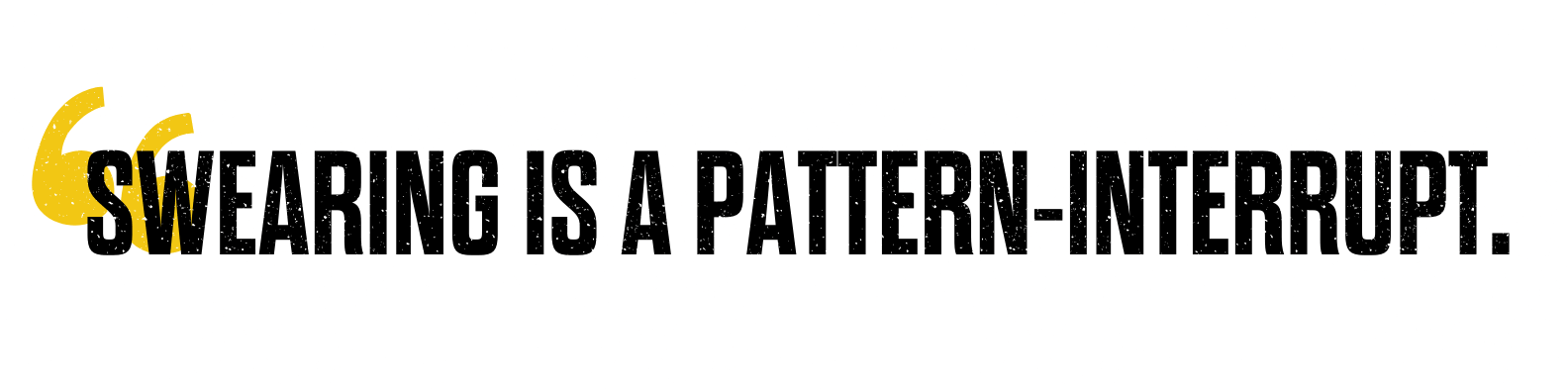
Swearing is a pattern-interrupt. And in a world full of beige content, where everything sounds the same, it's a way to get noticed. To get engagement. And I'm not sure if you're aware, but getting noticed and getting people engaged is kinda the whole point of our business. We don't swear to offend. We swear to show we're human. We swear to wake people up.
And yes, there is the inevitable objection that we're not "professional". It's not "appropriate". It's not "credible". It's not "safe". But then that depends entirely on your definition of "professionalism". Does professional have to mean sterile? Does credible have to also mean joyless? Does serious and safe have to also mean boring? We don't think so.
Our work deals with human behaviour under pressure. We deal with mistakes and stress and emotion. And the uncomfortable reality that people and their brains don't behave like we want them to. Pretending we live in a perfectly polite, emotionally neutral vacuum is not professionalism. It's insanity.
Attackers understand this. They manipulate urgency, tone, fear, curiosity, and language with absolute precision. So when we insist that the tone of our content does not matter, we're literally fighting with one hand behind our back. We're not here to play a role in corporate theatre. We're here to change behaviour when it counts.
Swearing is a spice, not the main ingredient. We don't swear constantly. We don't swear AT people. We don't swear to punch down, to fill space, or to replace having a point. A swear word without intent is just noise. A swear word with intent is a signal. It says a human wrote this. It says you're allowed to feel something. It says this isn't another piece of corporate mush that you can just ignore. And it creates permission. Permission for people to be honest, to react... to care.
Respect isn't about politeness. It's not about sanitising your language to the point it can't possibly offend, surprise, or mean anything. Until it's devoid of all emotion. Real disrespect is pretending that people are simpler, blander, and more fragile than they actually are.

We respect our audience enough not to lie to them. We know they swear. We know they laugh. We know they get irritated, bored, cynical, and occasionally fucking furious. We know they roll their eyes at most run-of-the-mill engagement content because they have seen it all before and none of it has ever changed a damn thing. They watch Tarantino films. They enjoy Frankie Boyle. They recognise sharpness, tension, and honesty when it shows up, because that is how real language sounds when it is not being managed to death.
They're not robots waiting to be politely informed. They are human beings responding to tone, rhythm, and truth.
So yes, sometimes, occasionally, every now and again, we might say fuck. Not because we are trying to be edgy. Not because we think it makes us cool. (We are cool, but for way better things than swearing). And not because we are confusing provocation with substance. We do it because language matters, and pretending otherwise would be dishonest.
And if honesty makes some people uncomfortable, that tells us far more than silence ever could.
Stop Training. Start Rehearsing.
See what changing behaviour actually looks like when the stakes feel real.
Book a Session →