
How culture, flow, and human behaviour determine whether complex systems succeed.
Available on
Audible & Amazon
Author
Gene Kim
Behaviour Stage
Culture
Overview
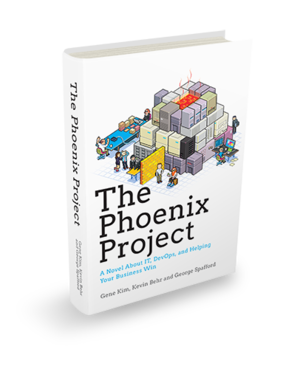
The Phoenix Project is a fictional story that follows an IT leader tasked with rescuing a failing, high-pressure organisation on the brink of collapse. Through a narrative format, the book exposes how fragile systems, unrealistic demands, and dysfunctional working practices combine to create chronic failure. Rather than focusing on technology alone, it reveals how bottlenecks, silos, and constant firefighting undermine both performance and morale.
At its core, the book is about systems thinking. It introduces the principles of flow, feedback, and continuous learning, showing how organisations get into trouble when they prioritise speed over stability, heroics over process, and blame over understanding. By framing these lessons as a story rather than a manual, The Phoenix Project makes complex operational and cultural problems easier to recognise... and harder to ignore.
Why this matters for security behaviour
The Phoenix Project matters for security behaviour because many security incidents emerge from the same conditions the book describes: overloaded teams, poor communication, unclear ownership, and pressure to “just make it work.”
In these environments, security controls are bypassed not out of malice, but necessity. The book highlights how risk increases when organisations reward firefighting over prevention and treat incidents as individual failures rather than systemic ones.
For security teams, it reinforces the idea that resilient behaviour depends on healthy systems, clear priorities, and a culture that values stability as much as speed.
Key Takeaways
-
System failures are usually behavioural failures
Technology rarely breaks in isolation... it breaks because people and processes are under strain.
-
Firefighting creates more risk, not less
Constant urgency prevents reflection, learning, and long-term improvement.
-
Flow matters more than effort
Overloading teams reduces effectiveness and increases mistakes, even when everyone is working hard.
-
Silos undermine security and resilience
When teams don’t share context or responsibility, risk becomes invisible until it’s too late.
-
Blame hides the real problem
Focusing on who caused an issue prevents organisations from fixing why it happened.
- Learning cultures outperform heroic ones
Sustainable security comes from calm, repeatable processes... not last-minute heroics.