
The Brain Doesn't Learn Through Slides
The brain doesn't store information. It stores experience. This page explains why - and what it means for every training programme that still thinks a completed module counts as learning.
The Behaviour Cycle White Paper ⋅ Research Series
56%
Better test scores with active learning vs passive lectures - same students, same content, different format. Active learning doesn't just feel more engaging. It produces measurably different brains.
Deslauriers et al., PNAS (2019). 70% vs 45% on identical material.
1.5×
Sit someone in a lecture and they're 1.5x more likely to fail the same test as someone who learned the same material actively. Same content. Different format. The format is doing more work than anyone admits.
Freeman et al., PNAS (2014). Meta-analysis of 225 studies.
40%
When a task is the right kind of hand - challenging enough to hold attention, not so hard it overwhelms - people stay in it 40% longer and retain more. That's not a happy accident. It's the state immersive learning is deliberately designed to engage.
Csikszentmihalyi & Schneider (2000); Shernoff et al. (2014).
Information is not the bottle neck
Most cybersecurity training is built on one assumption: give people the right information and they'll do the right thing. It sounds reasonable. It is also how you end up with an employee who aced the phishing quiz at 9am and handed over their credentials to a convincing stranger by 3pm.
The brain is not interested in information for its own sake. It is a ruthlessly efficient organ that filters out anything low-stakes, emotionally flat, or disconnected from something that actually matters. Passive training ticks all three boxes. The brain discards it accordingly.
Understanding why this happens is not optional background reading. it is the reason most training programmes fail - and the design logic behind everything we build.

Four things happening in the brain that passive training doesn't touch.

No emotion, no memory
The brain remembers what it felt, not what it processed. When something carries emotional weight - urgency, surprise, consequence - a structure called the amygdala flags it for deep storage. It sticks. A phishing quiz on a Tuesday morning carries none of that signal. The brain files it under things that don't matter. Which is exactly what it is.
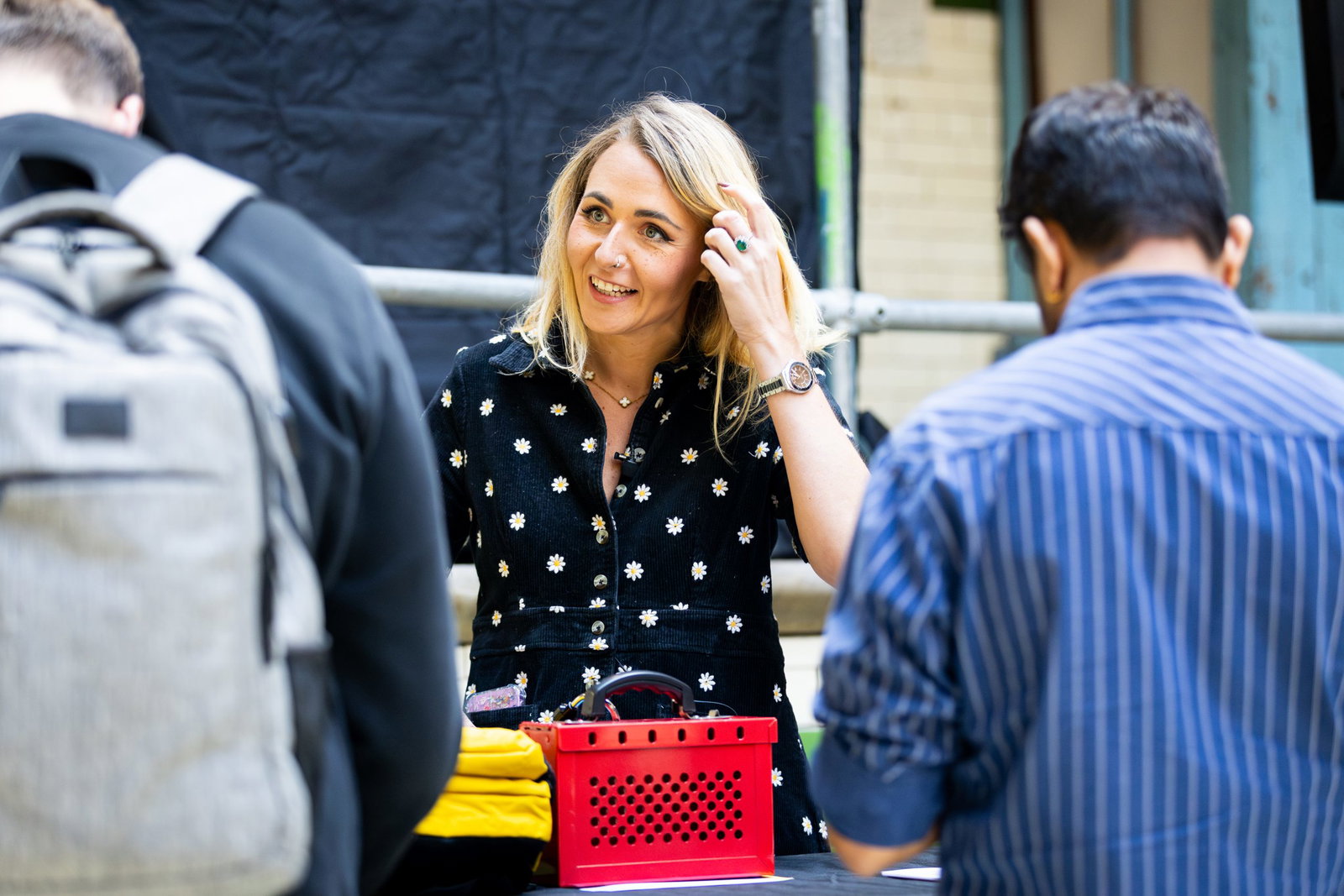
Surprise makes things stick
Dopamine neurons don't fire in response to rewards themselves, but to unexpected rewards. This is the brain's core learning mechanism. Challenge, novelty, and uncertain outcomes fire it. Predictable, linear content does not. Every immersive scenario engineers this signal deliberately.
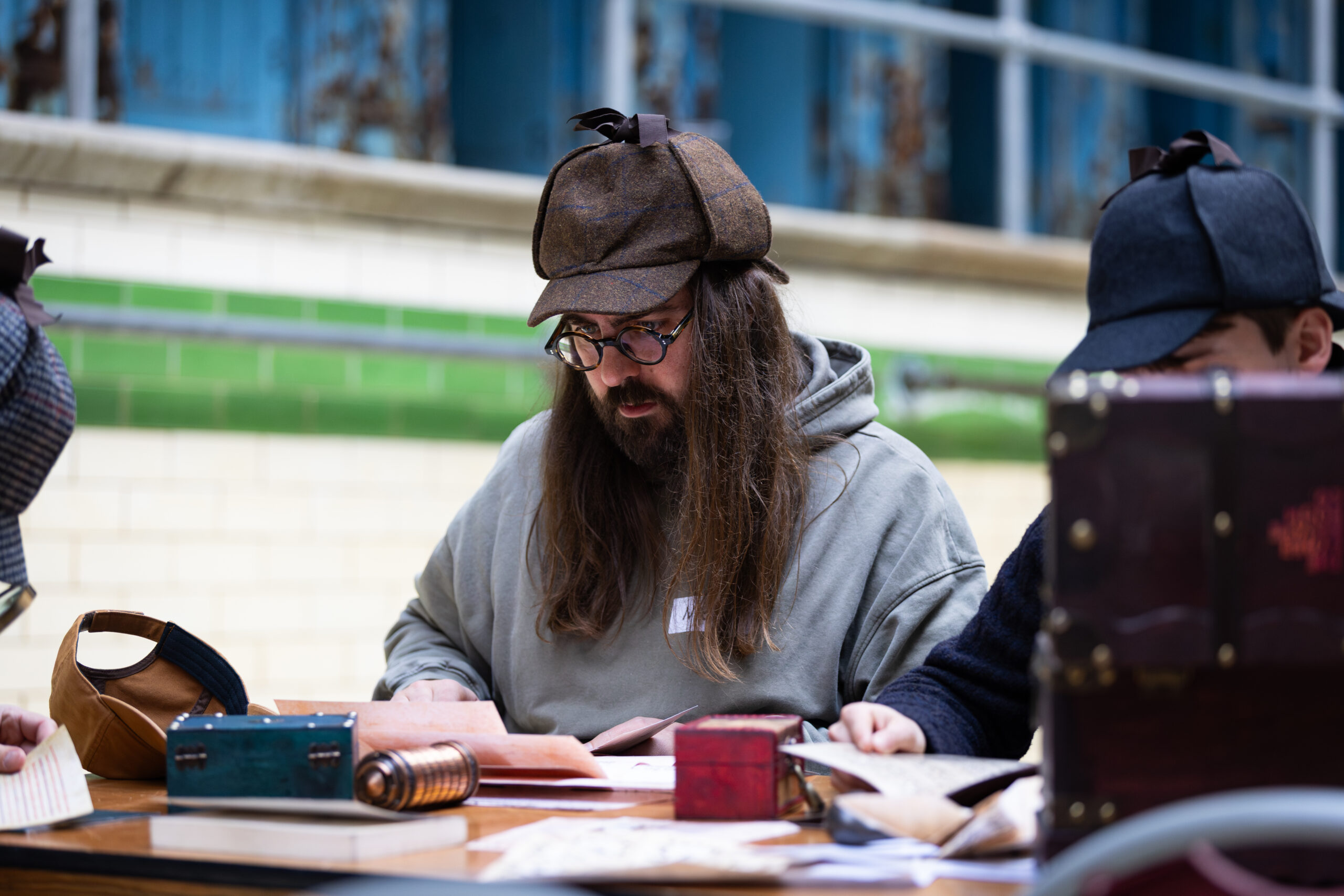
You have to live it to learn it
Doing something and being told about something are not the same cognitive experience. When you physically navigate a scenario - make a decision, feel the consequence, adjust - the brain engages regions it simply doesn't activate passively. The learning goes in differently. It comes back out more reliably.

The right kind of difficult
When a task is the right kind of hard - challenging enough to hold attention, not so hard it overwhelms - people stay in it 40% longer and retain more. Escape rooms are specifically engineered to produce this state. Compliance modules are specifically engineered to avoid it.
225 Studies Said the Same Thing. Nobody Changed The Training.
You cannot learn something you don't care about. Not properly. Not in a way that survives contact with a real situation. Mary Helen Immordino-Yang at the University of Southern California spent years mapping this: attention, memory, and decision making are not separate from emotion. They are built on top of it.
Freeman et al. pulled together 225 studies across every STEM discipline and found the same result every time: students in passive lecture formats were 1.5 times more likely to fail. Not marginally worse. One and a half times more likely to fail the same test on the same material.
56%
Better test scores after active learning vs passive lectures. Same students. Same content. The only variable was the format.
Deslauriers went further. Active learning versus passive lectures: the active group scored 70%, the passive group 45%. Here's the part worth sitting with: the students in the lecture group reported feeling like they'd learned more. Passive training doesn't just fail to teach. It convinces people they've been taught.
Behaviour change is a neurological event before it is a training outcome. Design for the brain you actually have.
- Fastenrath, M. et al. (2014). Dynamic Modulation of Amygdala–Hippocampal Connectivity by Emotional Arousal. Journal of Neuroscience, 34(42).
- Immordino-Yang, M.H. & Damasio, A. (2007). We Feel, Therefore We Learn. Mind, Brain, and Education, 1(1).
- Freeman, S. et al. (2014). Active learning increases student performance in science, engineering, and mathematics. PNAS, 111(23). Meta-analysis of 225 studies.
- Deslauriers, L. et al. (2019). Measuring actual learning versus feeling of learning. PNAS, 116(39).
- Schultz, W. (1997). Dopamine reward prediction error coding. Research programme, Cambridge / Fribourg.
- Howard-Jones, P. (2009). Uncertainty and engagement with learning games. Instructional Science, 38(1).
- Csikszentmihalyi, M. & Schneider, B. (2000). Becoming Adult. Basic Books.
- Chi, M.T.H. & Wylie, R. (2014). The ICAP Framework. Educational Psychologist, 49(4).
Find out where your programme is losing people.
The Behaviour Cycle Check takes three minutes. It tells you exactly which stage you're skipping - and what to do about it.