

Give your champions something worth championing.
You’ve done the hard part. You’ve found the right people, given them the title and asked them to shift the culture of an entire organisation. The part most programmes skip is giving them the tools to do it.
Champions networks stall because champions have nothing to do.
Security champions programmes are a genuinely good idea. Take your most engaged people, give them a role in shifting the culture and let peer influence do what top-down communication never could.
In practice, most hand people a title, a badge for their email signature and a vague instruction to “raise awareness”. Then everyone wonders why engagement has dropped off by month three.
The problem isn’t the people. Champions are often the most motivated people you have. The problem is that there’s nothing for them to run with: no mechanism, no shared language, no experience they can point to and say “this is what we’re here for”.
A champions network without something to champion is a distribution list with better branding. What changes it is a programme with real substance: experiences colleagues want to take part in, moments that create shared language, and content that doesn’t need a comms degree to deliver.
Champions are your culture multiplier.
Engagement and awareness build what people know and notice. Culture multiplies it, or cancels it out. Champions live in the culture term.
They hold the shared language between sessions and make good behaviour feel like how things work round here, not like training. But they need something worth reinforcing. Give them flat content and they have nothing. Give them something people talk about, and the culture does the rest.
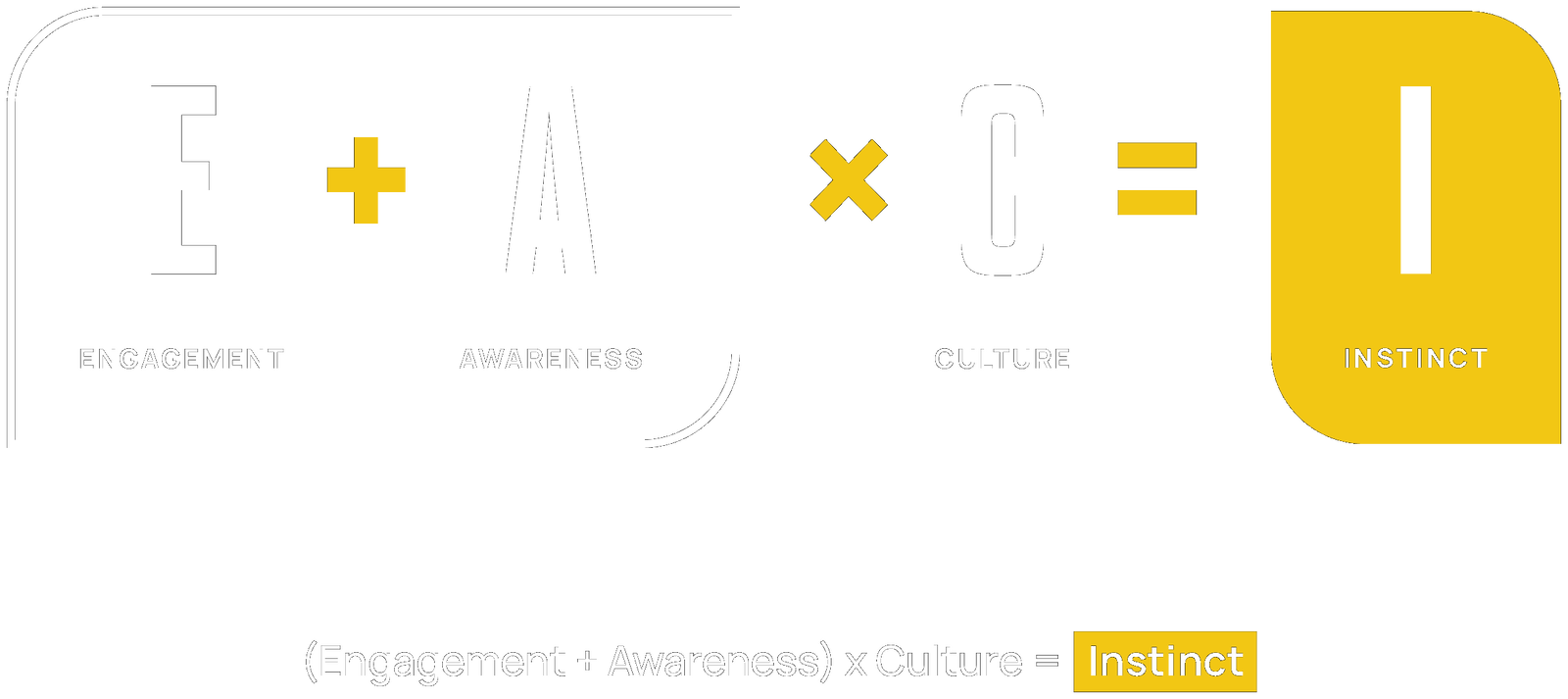
Engagement
Earn attention. Nothing else works without it.
Awareness
Recognise the threat when it’s in front of you.
Culture · where champions live
Make the right call normal, and keep it normal between sessions.
Instinct
The right call, automatically. What the whole system is pointing at.
Every product. Built for champions.
Champions don’t need to use all of them. But each one slots into a champions-led programme without adding delivery overhead.
What it gives your champions
A high-energy, hands-on experience that creates buy-in fast and gives the whole programme a credibility a poster campaign never will.
How champions use it
Through train-the-trainer, champions run sessions themselves: on their floor, with their team, at their pace. No outside delivery once it’s established.
Explore ESCWhat it gives your champions
Scale without the delivery burden. Champions push SHIFT missions to remote teams, other offices and anyone who can’t make a physical session.
How champions use it
They share access, keep an eye on who’s played in their team and use the conversation afterwards to reinforce it. SHIFT does the facilitation. Champions do the follow-through.
Explore SHIFTWhat it gives your champions
Real pressure-testing for the roles attackers actually call, without a blame culture attached.
How champions use it
Champions point the security team at the teams most at risk, and they’re the familiar face who debriefs a colleague after a call, so it never feels punitive.
Explore CTRL+VISHWhat it gives your champions
The moment that makes the whole programme visible, often around October. It tells everyone this is real, it matters and it’s different.
How champions use it
Champions drive the build-up: intrigue, hints and peer pressure to turn up. It spreads the way good things do, through conversation rather than a comms plan.
Explore SPACE_Everyone enjoyed doing the escape rooms and we had so much positive feedback. It brought to life how good security hygiene is so important, and made everyone think about how they can put this into action daily.
Emma Simmons · Cyber Culture Lead, Admiral

We train your champions. Then we get out of the way.
The goal isn’t a programme that depends on us. It’s one that runs inside your organisation, led by your people, and grows as your network does.
With train-the-trainer, we work directly with your champions: how to set up and reset the kit, how to run a session with no security background, how to debrief well, and what to do when a colleague’s reaction suggests a bigger conversation. Then we hand it over.
It isn’t there to make people feel like facilitators. It’s a practical handover that makes the programme self-sustaining.
A new scenario every quarter.
Champions can’t keep people engaged with the same experience twice. Rotating scenarios gives them something new to offer, a reason to run another session, and proof the programme is alive.
A champions programme that actually runs.
Most champions programmes die because they rely on goodwill, and goodwill runs out. This one gives champions something worth showing up for.
- Champions run regular sessions without central co-ordination or outside facilitators.
- Colleagues ask to take part rather than being prompted, chased or mandated.
- Security conversations happen naturally in team meetings, in Slack, in the moment, not just in formal training slots.
- Remote and distributed teams get the same quality of experience through SHIFT, with no gap between head office and the field.
- October is something people look forward to anchored by a SPACE_ event your champions have been building towards for weeks.
- Champions have something to show the board participation, behaviour change and a story that holds up, measured in Instinct Lab.
- The programme grows as the network grows: new scenarios, new products, new cohorts, without rebuilding from scratch.
Give your champions network some teeth.
We’ll talk through where your programme is now, what your champions are working with and a sensible place to start. No pitch deck. No pressure.