
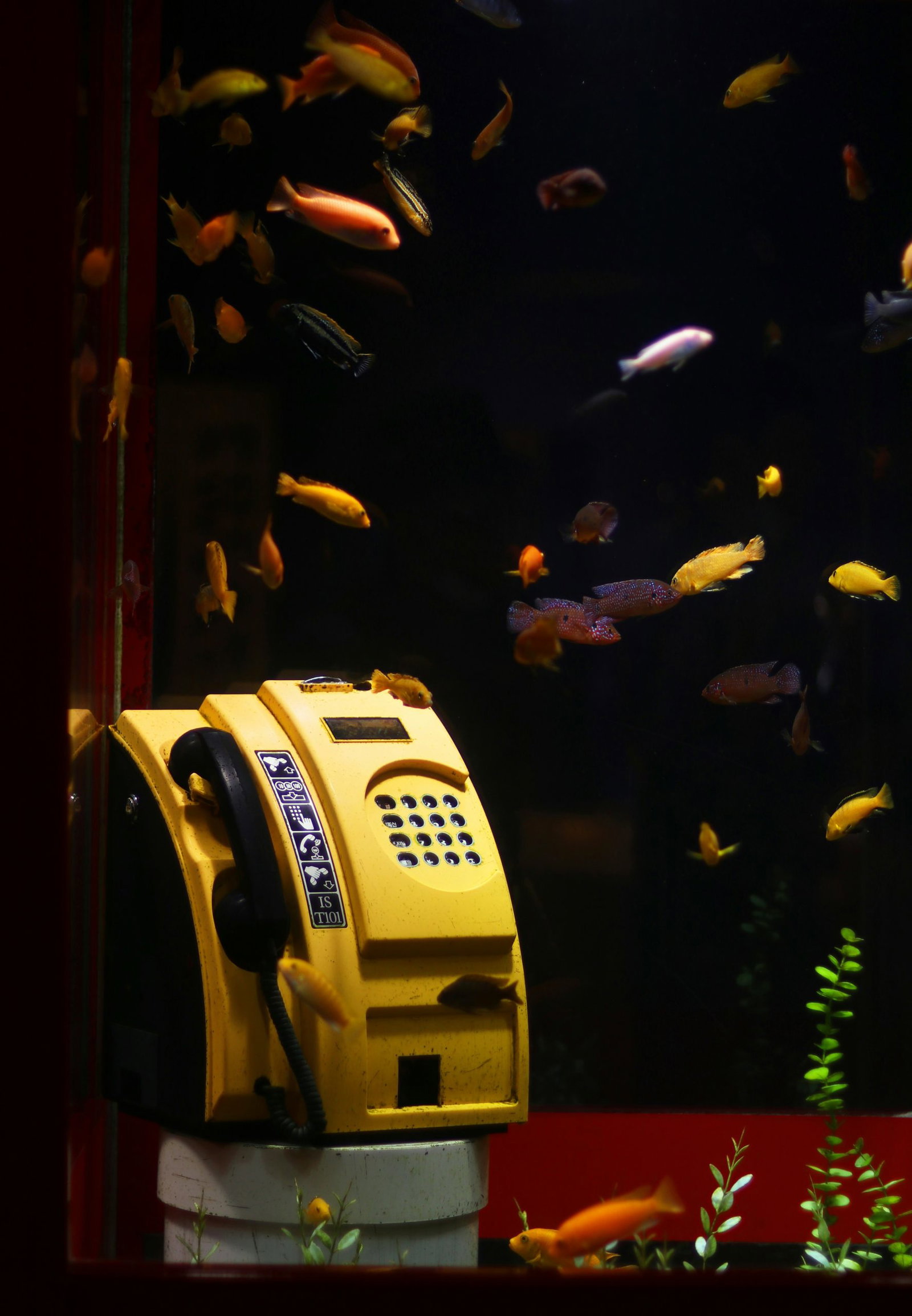
DIAL. Pick up. Prove it.
A bright yellow phone box appears in your reception. Someone lifts the handset.
Sarah, our trainer, sets the scene. Then an AI caller tries to talk them into something they shouldn't do, and Sarah shows them exactly how it got them. Ten minutes. No slides.
One handset. One caller. No warning.
Voice is the channel people trust and the one nobody rehearses.
Staff are told "verify the caller" on a slide once a year. Then a real voice with a real reason rings at a busy moment, and the slide isn't there. DIAL. puts the practice where the risk is: on a phone, with a voice, under time pressure. Every call is live, so every conversation is different. Nobody hears a recording. Nobody knows the script.
Pick up
Lift the handset. Sarah, our trainer, answers, asks your first name and what you do, then explains the tricks the caller is about to use on you. Then she hands you over.
The call
Now it's someone from IT, HR or a supplier. The caller has a name, a reason and a deadline, and pushes harder every time you resist. If you're about to give something away, Sarah steps in and stops the call there.
The debrief
Sarah comes back and asks what felt off, why the pressure worked, and gives you the line to use next time. Then one more go if you want it. Most people take it.
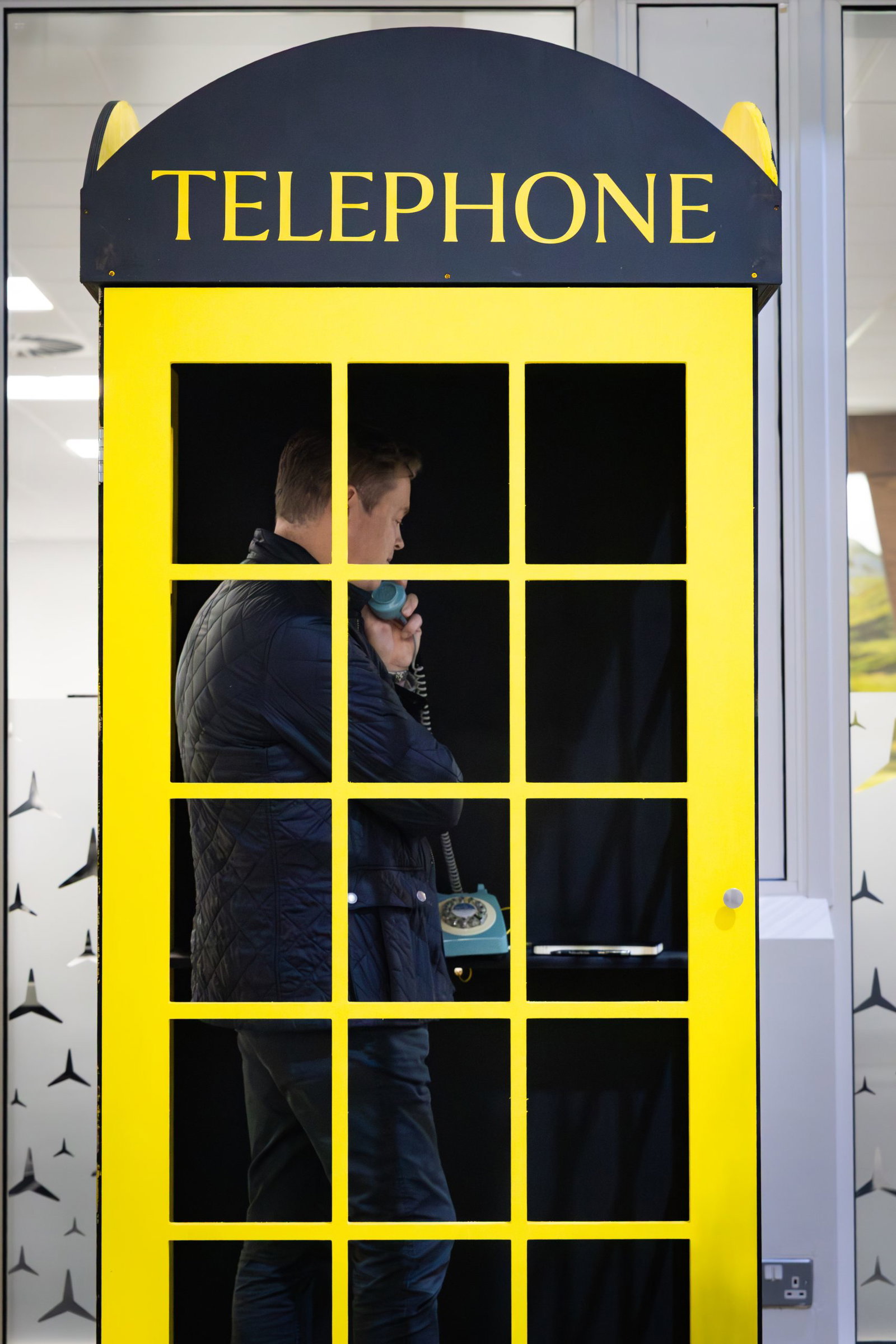
A phone box does the recruiting
Four BT-style boxes, painted our yellow, each with a working handset on our own VoIP phone system.
Each is a single-person experience. It needs a plug socket, an internet connection and about a square metre of floor.
And it's a phone box. People walk past it, ask about it, dare each other to try it. The set does the recruiting. You don't have to.
Four calls that sound like work
Each box runs its own scenario. These four come as standard, each built around a different trick and a different behaviour, with hard stops on anything that could touch real systems or real money.
The Surprise Bonus
Someone from HR rings with good news: a bonus, but only if you confirm a few details before the payroll cut-off. Friendly from start to finish, and that is what makes it work.
The Urgent Supplier Payment
A supplier you've supposedly spoken to before. Their bank account is being frozen, a shipment is stuck, and your finance director has apparently already approved the change.
The Urgent Security Update
Your IT service desk needs you to run an update now. A website, a password, a sign-in code to read out. Calm and helpful at first, more insistent with every pushback.
The Desperate Colleague
The roles flip. You're the service desk, and a panicking colleague is locked out, terrified of her manager and begging you to skip the security checks just this once.
Your organisation, your jargon
We can put your organisation's name on the standard scenarios, or write new ones around your own helpdesk, suppliers, payment process and the way your senior team talks. It's the difference between "a scam call" and "a scam call that sounded exactly like us". Custom scenarios are priced separately.
104 people. Four boxes. One day.
At one client event, 104 people stepped into a DIAL. box. Most held firm. Everyone got a debrief from Sarah, and the client got a report showing where the pressure worked.
See the full report, with the client's name taken outWhat you get after the event
Every call feeds a results report, written up for you and delivered as a slide deck you can share.
Nothing in it identifies a caller. It shows how your people responded as a group, and what to do about it.
The day in numbers
How many calls, how many ran a full scenario, total talk time and the longest call.
How people did
The share who held firm, gave a little or handed something over, for each scenario.
The red flags they spotted
The warning signs callers noticed most often, in their own words.
When and what
When the calls came in through the day, and which scams people chose.
Moments from the day
A few short highlights from the calls. They never name anyone.
What it tells you
Our takeaways: where the pressure worked, and what to focus on next.

A product on its own. A warm-up for everything else.
Hire one box or four, for a day, a week or a month, and put them where the footfall is.
Reception, the canteen, the conference floor, the lift lobby. Leave them there and let curiosity do the work.
DIAL. also drops straight into a bigger SPACE_ day alongside the other installations. Ten minutes in a phone box is a good warm-up for thirty in a bank vault.


The spec
- Who
- One person at a time
- Length
- Up to 10 minutes a call, debrief included
- Boxes
- 4 available
- Scenarios
- 4 as standard, custom on request
- Calls
- Live AI voices on our own phone system
- Venue
- A plug socket and an internet connection
- Hire
- By the day, week or month
- Afterwards
- A results report and slide deck
Vishing awareness training that happens on a phone
Knowledge isn't the gap. Practice is.
People know what a scam call is. They can spot the red flags on a poster. Then a confident voice rings with a plausible reason and they hand over the details anyway, because the poster isn't in the room and the voice is. DIAL. trains the instinct: pause, verify through a channel the caller didn't give you, hang up, report it.
What a vishing call tries to make people do
Share information, reveal a login, approve a payment, skip a check. Vishing works by making the request feel urgent and familiar at once, so complying feels like doing your job. The question isn't whether your people would spot a scam call on a poster. It's whether they'd act on one while someone senior-sounding waits on the line.
What a good vishing simulation should show
Whether people pause when something doesn't add up. Whether they verify, and escalate. Whether they overshare when the conversation gets awkward. If a simulation only tells you who failed, it's a test. If it shows each person the moment they slipped and lets them go again, that's how behaviour changes.
Phone boxes, answered.
What is DIAL.?
DIAL. is a yellow phone box with a live AI caller on the line. Staff lift the handset, Sarah, our trainer, sets the scene, and then an AI attacker tries to talk them into something they shouldn't do. Sarah debriefs them on the same call. It's built by The Cyber Escape Room Co.
How long does a call take?
Up to ten minutes, including Sarah's set-up, the call itself, the debrief and a second go if they want one. Short enough for a coffee break.
Do people need to be briefed first?
No. Someone can walk up cold and lift the handset. Sarah explains what's about to happen before the attacker calls, and makes it clear it's practice, not a test.
Are the calls recorded?
Yes. Calls are recorded and transcribed so we can write your results report. Only our team sees the recordings, they are deleted after a set period, and nothing in your results identifies a caller. Signs at the box tell callers that calls are recorded and the voices are AI. No real systems, accounts or payments are involved at any point.
What results do we get?
A results report after the event, as a slide deck you can share: how many calls there were, how people did on each scenario, the red flags they spotted, when people called, a few moments from the day and our takeaways.
What scenarios come with it?
Four as standard: The Surprise Bonus (HR), The Urgent Supplier Payment (Finance), The Urgent Security Update (IT) and The Desperate Colleague, where the caller plays the IT service desk. Each box runs its own scenario.
Can you write scenarios for us?
Yes. We can frame the standard scenarios with your organisation's name, or write new ones around your own teams, processes and jargon. Custom scenarios are priced separately.
Can we hire it on its own, without a full SPACE_ event?
Yes. DIAL. is popular as a standalone hire. One box or all four, for a day, a week or a month, in your reception or wherever the footfall is. It also sits alongside any other SPACE_ installation.
What does the venue need?
A plug socket and an internet connection for each box, because the boxes run through our VoIP phone system, plus about a square metre of floor. We deliver, install and collect.
How many people can use it in a day?
At up to ten minutes a call, one box handles around six people an hour. Four boxes in a busy lobby will see a lot of an office in a day. It depends on where you put them.
Book DIAL.
Tell us where it's going and for how long. We'll bring the boxes, set them up and write up what happened.
Every call is a simulation. No real systems, accounts or payments are involved.